

Engineering
Why Synchronous Webhooks Break AI Pipelines (And How We Fix Them)
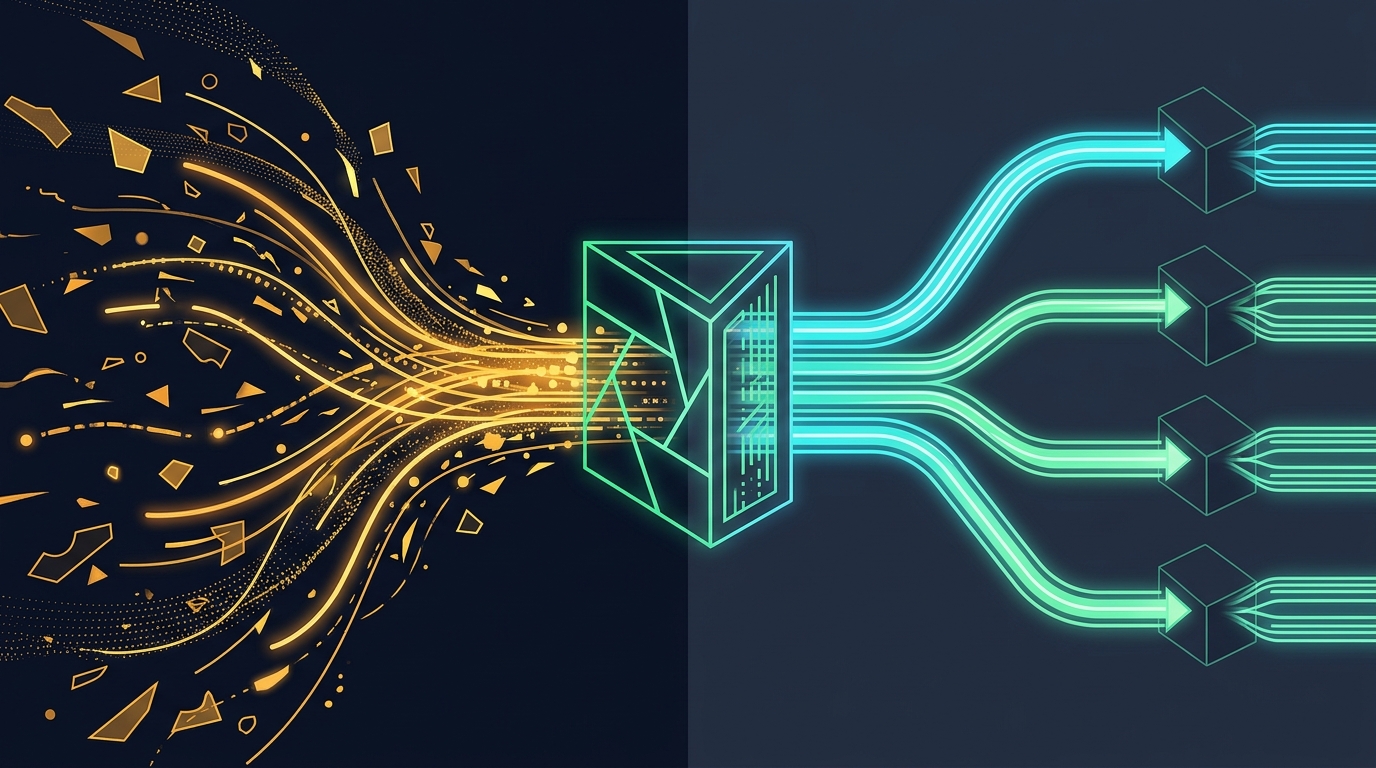
Stripe waits 20 seconds before dropping a webhook connection. Slack gives you strictly 3,000 milliseconds. Yet every month, we audit production Next.js or Node.js codebases where an engineering team is running a 14-second LLM extraction prompt, a PDF OCR pass, and three database writes directly inside a synchronous POST /api/webhooks route. Everything looks fine in staging with a two-page test file. Then a customer uploads a 15MB scanned vendor contract at 2:00 PM on a Tuesday, the upstream model takes 24 seconds to respond, and the webhook sender hits a 504 Gateway Timeout. Because webhook providers guarantee at-least-once delivery, that timeout triggers an automatic retry storm. Within four minutes, your server is running six parallel copies of the exact same expensive AI workflow, corrupting database state and burning tokens.
The 50-Line Ingress Rule: Validate, Enqueue, and Return 202
A production webhook handler has no business importing an LLM SDK or opening a database transaction. When we architect event-driven systems, we enforce a strict 50-line budget on every ingress route. The handler does exactly three things: read the raw request buffer to verify the HMAC-SHA256 signature (such as Stripe-Signature or X-Hub-Signature-256), extract the event ID and payload pointer, push a lightweight job envelope to an asynchronous message queue, and immediately return 202 Accepted. Total execution time stays under 45 milliseconds. By decoupling ingestion from execution, an upstream API spike of 500 concurrent webhooks simply buffers in AWS SQS, Cloudflare Queues, or Upstash QStash without exhausting your serverless concurrency pool or hitting PostgreSQL connection limits.
Atomic Idempotency Locks: Stopping Retry Storms at the Gate
Returning a fast 202 Accepted eliminates timeout-induced retries, but it does not stop network blips from delivering duplicate webhook payloads. If you only check for existing records at the end of a 15-second AI pipeline, two parallel workers will still pass the initial check simultaneously—a classic time-of-check to time-of-use (TOCTOU) race condition. Before a queue consumer touches an LLM endpoint or downloads a file from S3, it must acquire an atomic lock in Redis using SET idempotency:evt_98a7f6 PROCESSING NX EX 86400. The NX flag guarantees that only the first worker wins the lock. If a second worker picks up a duplicate delivery 10 milliseconds later, Redis returns nil, and the worker drops the message immediately. Only when the worker finishes writing the final output to Postgres do we transition that key's state to COMPLETED—or delete the lock on a transient 503 Service Unavailable so the queue's native exponential backoff can safely retry.
Step-Level Checkpoints and Payload Offloading
Passing a 4MB base64-encoded PDF or a massive JSON array directly inside a queue message will immediately crash against AWS SQS's 256KB payload ceiling (InvalidParameterValue: One or more parameters are invalid. Reason: Message must be shorter than 262144 bytes). Instead, stream raw files straight to an S3 or Cloudflare R2 bucket during ingress and pass only the object key (s3://ingest-bucket/2026/10/doc_491.pdf) inside the queue payload. Furthermore, when a worker executes a multi-step agent loop—say, OCR parsing followed by structured schema extraction and an ERP webhook push—never treat the whole job as a single monolithic retry block. Checkpointing each completed step in your database or durable execution engine (like Inngest, Trigger.dev, or Temporal) ensures that if step three hits a 429 Too Many Requests rate limit, the retry resumes directly at step three without re-running or re-billing steps one and two.
Where Lean Engineering and Practical Automation Fit
You do not need a sprawling Kubernetes cluster or a six-month platform rewrite to make async pipelines reliable. You need clean architectural boundaries: a sub-50ms ingress edge, atomic Redis idempotency locks, pointer-based queue payloads, and dead-letter queues (DLQs) wired straight into your engineering alerts so failed jobs never vanish silently. At Enorexa, we build fault-tolerant full-stack applications and AI automation workflows that survive real-world traffic spikes without runaway cloud bills. If you want to inspect your raw webhook payloads or test schema structures right now, check out Enorexa Tools, or talk to us to harden your production backend before your next traffic surge.
Related Engineering & AI Articles
Cloud
DynamoDB Streams and Lambda: Killing the Poison Pill Loop That Freezes Shards
When an unhandled schema error hits an event-driven stream, your entire shard halts. Here is how we isolate poisoned payloads without dropping operational events.
November 7, 2026
Engineering
DynamoDB Single-Table Design: Why LLM Workflow State Breaks Partitions
Storing AI agent state in DynamoDB single-table schemas causes hot partition throttling and 400KB item limit traps. Here is how to isolate durable runs without operational fires.
November 6, 2026
AI
Why OCR Scrambles Multi-Page PDF Tables (And How Vision Pipelines Fix It)
Standard OCR engines flatten multi-column financial and logistics tables into garbled text streams. Here is how hybrid PDF bounding-box parsing and vision models stop silent number transposition.
November 5, 2026