

Engineering
Custom Software Scoping in 2026: How AI Rewrote the Build vs. Buy Equation
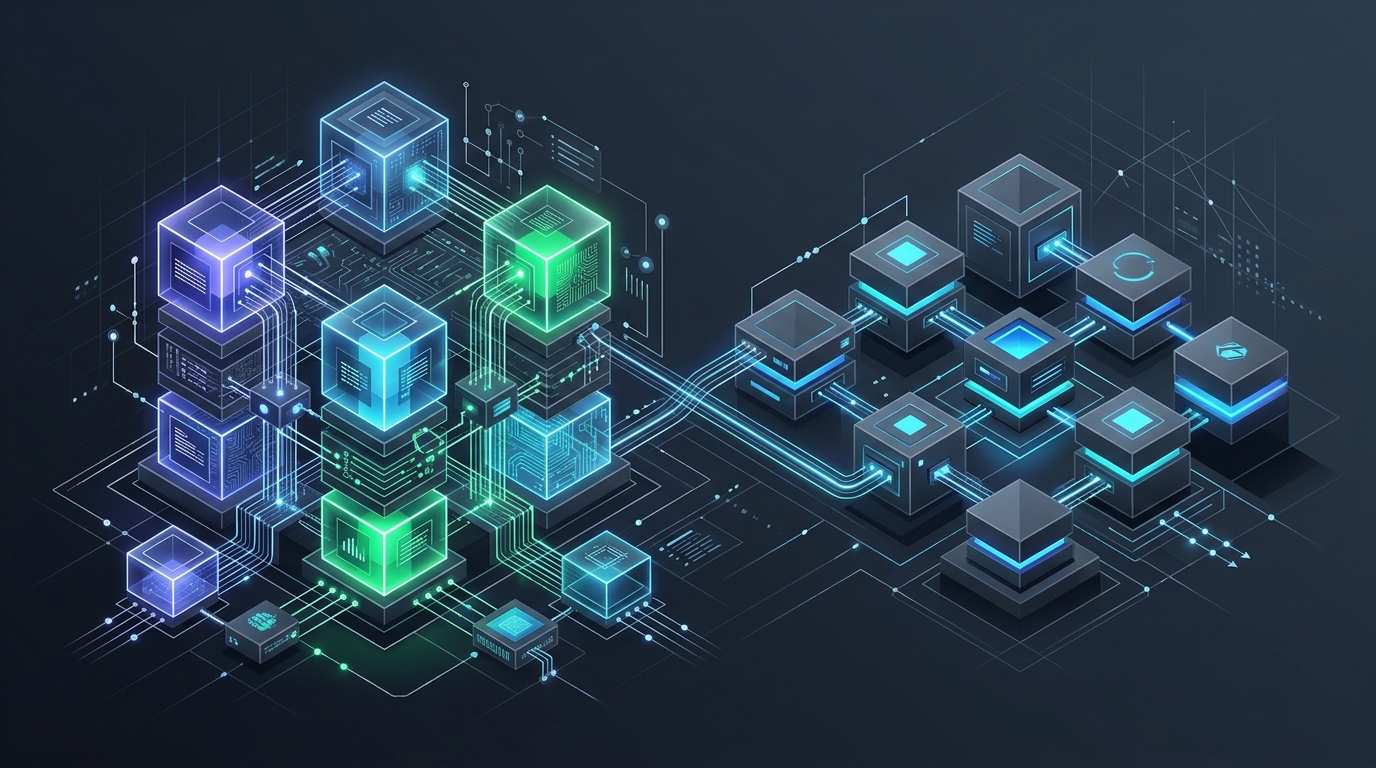
For the last decade, the default advice for startup founders, CTOs, and operations leaders was simple: buy off-the-shelf SaaS for everything that is not your core product, and only build custom software as a last resort. By late 2026, that conventional wisdom has hit a wall. Operations teams are drowning in per-seat SaaS licensing renewals, brittle webhook glue, and rigid workflows that force high-growth companies to bend their unique operational advantages around generic software limitations. Meanwhile, AI-augmented engineering has compressed custom development cycles so dramatically that the three-year Total Cost of Ownership (TCO) often favors owning your internal tools and core operational platforms.
Why Legacy Software Estimation Fails in 2026
Despite the velocity gains of agentic coding workflows, scoping a custom build remains where most engineering budgets go off the rails. A common mistake technical leaders make today is applying a blanket '50% AI discount' across an entire project timeline. While AI coding assistants and automated scaffolding have cut CRUD boilerplate, UI component generation, and unit test authoring by 40% to 60%, they have not shortened the time required for domain modeling, edge-case business logic, third-party API reconciliation, or security compliance. Accurate scoping in 2026 requires separating commodity application scaffolding from high-stakes domain engineering.
The Modular Monolith Advantage for AI-Augmented Teams
When architecting custom platforms today—whether a unified operations portal, a bespoke CRM workflow engine, or a customer-facing web and mobile platform—starting with a well-structured modular monolith in Next.js, Node.js, and Python consistently outperforms premature microservices. Beyond keeping cloud infrastructure lean and eliminating distributed transaction overhead, a unified codebase with strict internal domain boundaries gives both human engineers and AI coding agents complete context across database schemas, API contracts, and frontend state. Teams ship faster, refactor with confidence, and retain the ability to extract isolated worker services only when real throughput demands it.
Scoping Data Readiness and Deterministic Guardrails
If your custom software scope includes embedded AI capabilities—such as automated triage, intelligent document routing, or domain-specific copilot workflows—estimation must separate deterministic application logic from probabilistic model behavior. In production, building the user interface is rarely the bottleneck; curating clean data pipelines, writing automated evaluation suites, and enforcing deterministic fallback state machines account for the majority of the engineering effort. Furthermore, CTOs should always model LLM token throughput, vector indexing, and background worker queues as usage-based operational metrics rather than fixed build costs.
Where AI or lean engineering fits
The smartest way to de-risk a custom build is to replace six-month speculative roadmaps with a two-week architectural blueprint and a high-leverage vertical slice that proves ROI in production within 30 to 45 days. You can use free planning utilities on Enorexa Tools to audit your operational workflows, or streamline technical hiring with Enorexa Recruiter as your engineering org scales. If your team is weighing whether to replace expensive SaaS sprawl with a tailored platform or needs a battle-tested partner to scope and ship full-stack software, explore Enorexa or talk to us to map out your architecture.
Related Engineering & AI Articles
Cloud
DynamoDB Streams and Lambda: Killing the Poison Pill Loop That Freezes Shards
When an unhandled schema error hits an event-driven stream, your entire shard halts. Here is how we isolate poisoned payloads without dropping operational events.
November 7, 2026
Engineering
DynamoDB Single-Table Design: Why LLM Workflow State Breaks Partitions
Storing AI agent state in DynamoDB single-table schemas causes hot partition throttling and 400KB item limit traps. Here is how to isolate durable runs without operational fires.
November 6, 2026
AI
Why OCR Scrambles Multi-Page PDF Tables (And How Vision Pipelines Fix It)
Standard OCR engines flatten multi-column financial and logistics tables into garbled text streams. Here is how hybrid PDF bounding-box parsing and vision models stop silent number transposition.
November 5, 2026